
BY STAS MARGARONIS, RBTUS
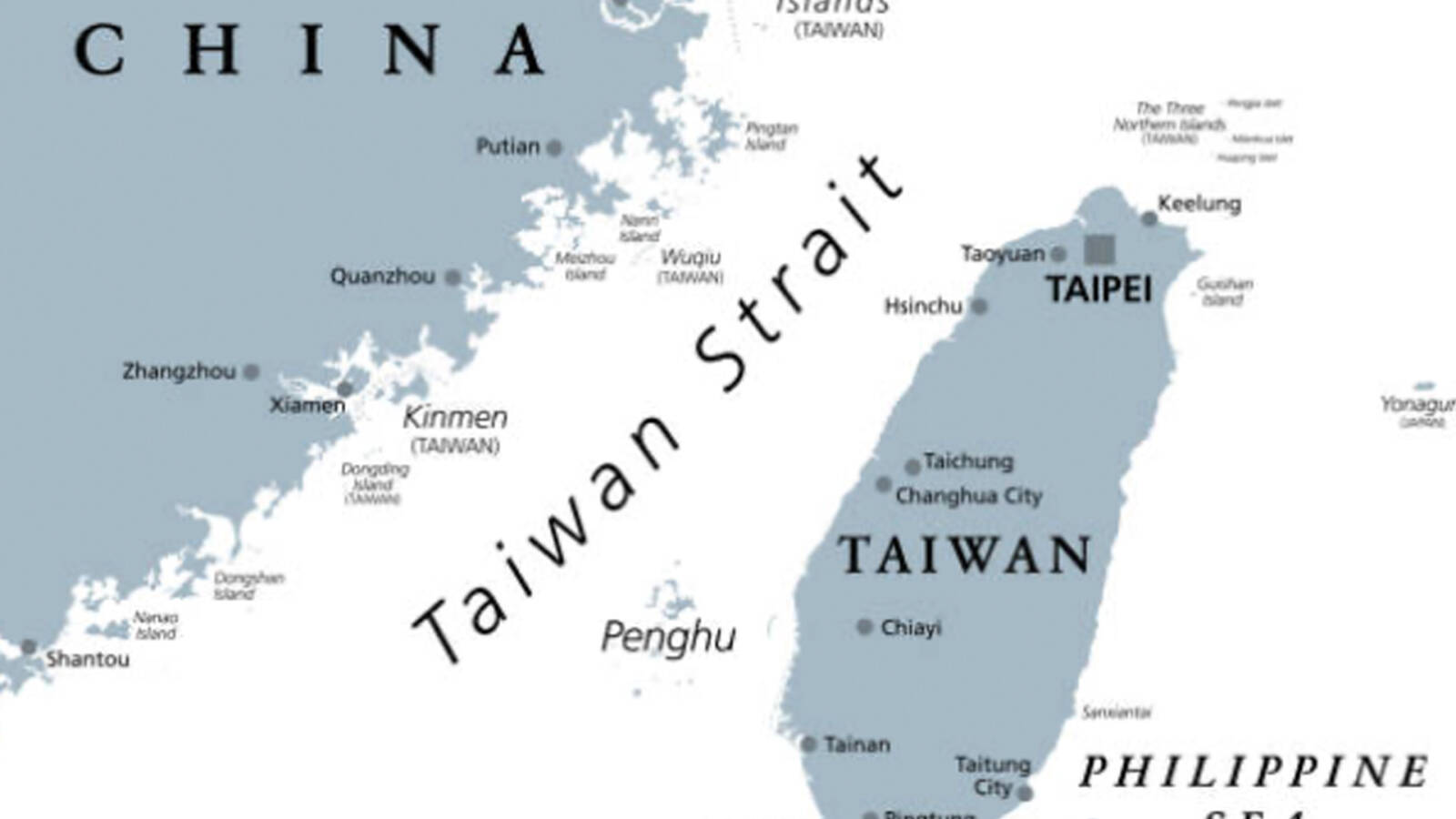
The recent purge of top military commanders by Chinese President Xi Jinping, growing resistance within Taiwan to the KMT opposition party’s support for a Chinese take-over and Japanese support for Taiwanese sovereignty are complicating China’s attempts to acquire Taiwan.
A big question mark is whether President Donald Trump’s lack of support will undermine Taiwan’s efforts to defend its sovereignty, according to a recent report by the Taiwan Strait Risk Report (TSRR).
The TSRR March 2026 report, published by veteran Taiwan analyst Peter Enav, casts doubt on China’s ability to invade Taiwan anytime soon and argues that a blockade of the island may be China’s only military recourse:
“The continuing fallout from the shock purge of two of China’s most senior military officers and its implications for the readiness of the Chinese People’s Liberation Army to mount a military campaign in and around the Taiwan Strait. Our main takeaway is that the purge probably disqualifies the PLA from invading mainland Taiwan anytime soon, but that it remains capable of mounting the kind of hermetic blockade that could eventually convince the Taiwanese leadership to sue for peace on China’s terms.”
Earlier this year, Taiwan’s main opposition party, the Kuomintang (KMT) effort to push for a political union with China seemed to be gaining steam. However TSRR now reports: “The second part of the risk puzzle relates to our strong sense that the newly installed chairperson of Taiwan’s main opposition Nationalist Party – the indefatigably China-friendly Cheng Li-wun – is running into serious trouble because of her extreme pro-China attitudes, and that unless she can deliver the goods in the November 28 local elections, she may find herself on the outside looking in – a development that would obviously have a negative impact on China’s strategy of subverting Taiwanese morale and so setting the stage for a non-kinetic Chinese takeover of the island.”
Will Trump Side with China Against Taiwan?
A third factor is the election of Donald Trump as president of the United States. Trump has shown a growing willingness to placate Russia’s invasion of Ukraine and China’s dominance in Asia: “The third of the three Taiwan risk pieces concerns recent comments from President Trump that he has been discussing U.S. arms sales to the island with Chinese leaders, in what appears to be a clear violation of longstanding American policy in the region.”
Trump’s decision to inform China is reversing policies dating back to President Ronald Raegan’s pledge that the U.S. would not consult with China on future arms sales to Taiwan, largely in an effort to help sustain flagging morale on the island: “Trump appears to be saying that Taiwanese morale is a matter of considerable indifference to him, and that he will do what needs to be done in order to stabilize U.S. relations with Beijing.”
This is also a reversal of President Joe Biden’s commitment to defend Taiwan if China invades with Trump making the shaky argument that Taiwan ‘doesn’t give us anything’[1].
Will Japan Comes to Taiwan’s Rescue?
A further factor, not mentioned in the Taiwan Strait Risk Report, that complicates China’s designs is a resurgent Japan under Prime Minister Sanae Takaichi.
In 2025, Takaichi said that Japan and the United States need to support Taiwan and its independence. Those strong nationalist remarks contributed to Takaichi and her LDP party winning a landslide election in February.
Since then, a new analysis that appeared in the Taipei Times entitled Is Takaichi’s win good for Taiwan? argues that Japan may be seeking to improve its relations with China and tone down support for Taiwan.[2]
The report authors, Huynh Tam Sang, a doctoral student at National Tsing Hua University and Truong Tuan Kiet, a master’s student at National Tsing Hua University provide a detailed analysis of the Taiwan-Japan dynamic that is worth quoting in detail:
“Last month’s general election in Japan ended in a sweeping victory for Japanese Prime Minister Sanae Takaichi and the ruling Liberal Democratic Party (LDP), which achieved an absolute two-thirds majority in the House of Representatives, a milestone unprecedented for any Japanese political party since World War II. Shortly after the landslide win, Takaichi pledged to push for a comprehensive restructuring of the national security apparatus, including the establishment of a new National Intelligence Agency, a significant increase in defense spending and a further relaxation of restrictions on military equipment exports. She also vowed to update Japan’s three core security documents — the National Security Strategy, National Defense Strategy and Defense Buildup Program.”[3]
This change is significant because: “Tokyo’s expanding military posture is likely to heighten Beijing’s skepticism, but mounting tensions with China would likely consolidate domestic support for Takaichi’s security ambitions. The Taiwan issue has emerged as a serious concern. First, this stems from Taiwan’s vulnerable and strategic location — sitting at the intersection of the East China Sea and the South China Sea. Second, the importance of the democratic nation is embedded in the deep-seated fear that if China unifies with Taiwan, the balance of power in East Asia could shift irreversibly.”
In November 2025, the authors say “…Takaichi said Tokyo could consider military intervention if Beijing were to use force against Taiwan. Her hardline stance on China helped her secure approval ratings of about 70 percent — a rare level for Japanese leaders in recent years … In her first speech to the Japanese Diet on Feb. 20, Takaichi warned of China’s increasing ‘coercion.’”[4]
However, the report goes on to say that Takaichi’s anti-China stance might be brief:
“Within hours of her electoral triumph, Takaichi signaled a more conciliatory stance toward Beijing by affirming that Japan ‘is open to dialogue with China.’ In her remarks, Takaichi underlined that she would seek ‘understanding’ from neighboring countries before considering a visit to the Yasukuni Shrine, a site deemed controversial for leaders in China and South Korea. … China still has considerable leverage to pressure Japan … Beijing prohibited the export of dual-use items (including seven types of rare earths and related materials) to Japanese entities that it claimed supplied Japan’s military …Takaichi has the political clout to pursue a realistic and flexible China policy. Even so, her conservative stance would most certainly keep Japan’s ties with China strained throughout her term …”[5]
The authors go on to say: “As for Chinese leaders, Takaichi’s public statements might have reinforced their perception that Tokyo is crossing Beijing’s ‘red line.’ If Takaichi maintains a hardline stance toward China or pursues policies that deepen ties with Taipei, Beijing would likely intensify pressure on Tokyo while hastening coercive measures to advance unification with Taiwan.”[6]
Conclusion
The authors conclusion is:” Despite a potential backlash from the KMT and China’s pressure, Taiwan has every reason to foster ties with Japan, given that the two democracies share liberal democratic values and the importance of preventing any forces that seek to undermine regional security. Perhaps efforts to enhance economic and trade ties while forging supply chain integration are crucial to aligning the interests of the two like-minded partners.”[7]
FOOTNOTES
[1] https://www.theguardian.com/world/article/2024/jul/17/donald-trump-taiwan-pay-us-defence-china-national-convention
[2] https://www.taipeitimes.com/News/editorials/archives/2026/03/05/2003853272
[3] Ibid.
[4] Ibid
[5] Ibid.
[6] Ibid.
[7] Ibid.