
By Kevin Policarpo
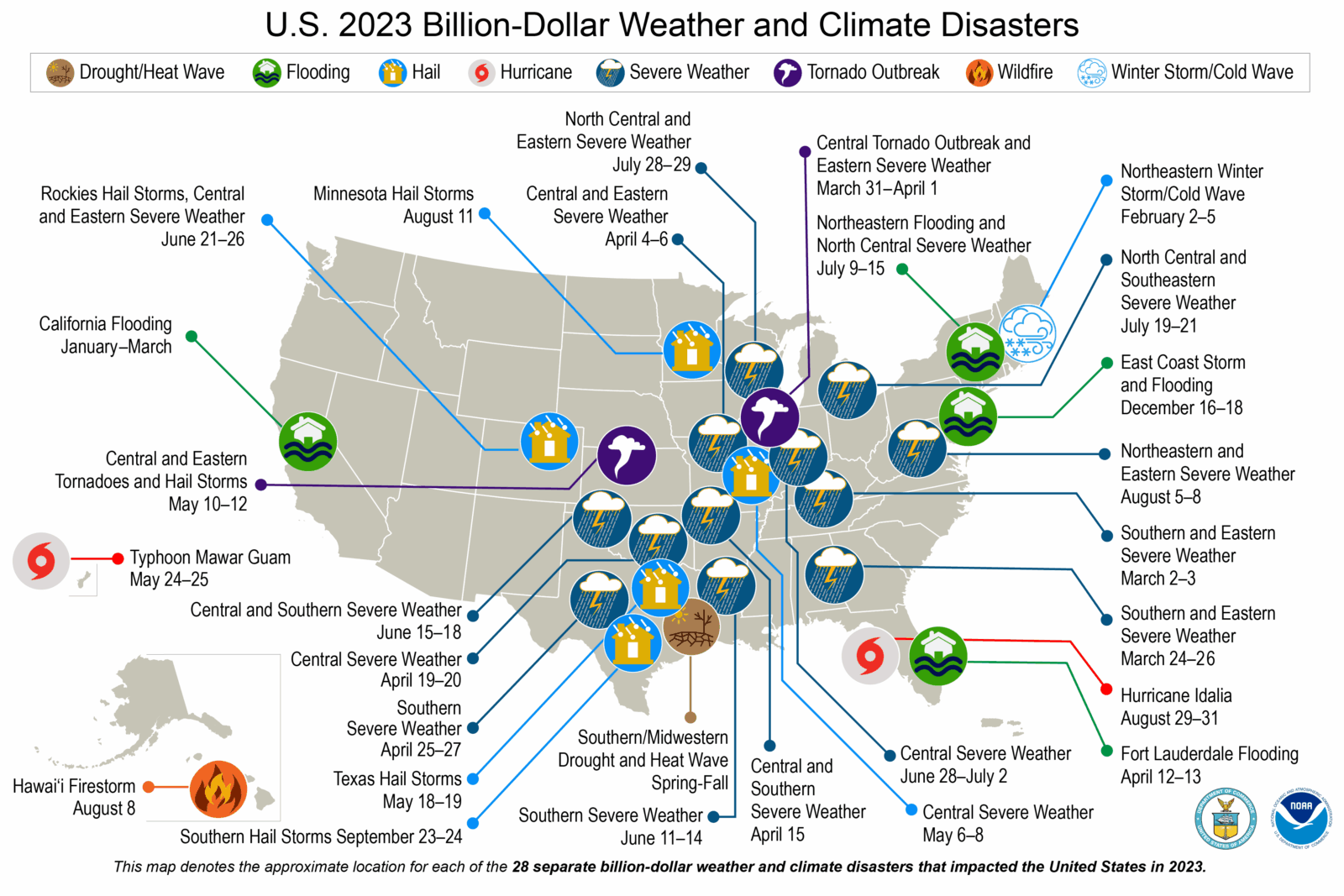
Cuts to NOAA’s personnel and operations by the Trump Administration have made the agency’s mission much more challenging as evidenced by charges that recent NOAA cutbacks may have delayed flood warnings in Central Texas. This, in turn, may have prompted a Congressional backlash so as to retore NOAA funding.
Congressional members from both sides of the aisle have worked together o repudiate deep cuts to NOAA proposed by the Trump administration and reiterate their support for a fully staffed National Weather Service during important appropriations markups in July.
In a full meeting of the House Appropriations Subcommittee on Commerce, Justice and Science (CJS) a bipartisan committee of 9 Republicans and 6 Democrats advanced a spending bill that would fund NOAA, the parent agency of the National Weather Service, at levels commensurate with budgets in previous years, according to a July 15th report by weather blogger Michael Lowry (see: https://michaelrlowry.substack.com/p/congressional-committees-reject-deep )
This is a major rejection of the 2026 NOAA budget proposed by the Trump administration last month, Lowry reports.
In its proposed budget, the Trump administration outlined a 27% reduction to NOAA’s budget for next fiscal year (beginning this October) that would eliminate NOAA’s Office of Oceanic and Atmospheric Research or OAR, which funds dozens of world class weather and climate facilities, including NOAA’s Atlantic Oceanographic and Meteorological Laboratory (AOML) and Hurricane Research Division (HRD) in Miami. AOML and HRD are critical to operational hurricane forecasts and without them, experts estimate hurricane forecast accuracy would tumble by 20 to 40%, Lowy noted.
Lowry reports: “In the spending bill advanced today by the House, NOAA’s budget would be reduced by 6% – from $6.18 billion in 2025 to $5.8 billion in 2026, with almost $1.1 billion added back to NOAA’s Operations, Research, and Facilities (ORF) account from what the administration’s proposal last month.”
Recent responses to the Trump administration cutbacks at NOAA reflect increased concerns over NOAA cutbacks:
- Climate change denial by the Trump administration has been a target of some criticism following the death toll from the Central Texas flash floods. Michael Bloomberg in a Bloomberg editorial warned: “Elected officials must be held accountable, now and in the future, for the lives lost in disasters brought on by increasingly extreme weather.”[1]
- The maritime industry is seeing major weather challenges making vessel operations riskier and more prone to cargo damage and loss of life according to the Britannia P&I (Protection & Indemnity) Club: “Whilst none of the above phenomena are new, their impact on the shipping industry is likely to evolve and increase due to climate change.”[2]
- A senior representative from the Union of Concerned Scientists said that NOAA’s work is essential for weather forecasters, mariners, farmers, emergency responders, and businesses, adding that many people may soon realize its importance.[3]
WHAT NOAA FIRINGS MEAN
On March 4th, 2025, the U.S. Department of Commerce laid off up to 880 employees from the National Oceanic and Atmospheric Administration (NOAA). This has raised serious concerns about the impact on weather forecasting, maritime safety, and economic stability.[4]
A Marine Insight article further elaborates on the subjects:
“The affected employees were probationary staff, including new hires and recently promoted personnel. This move was opposed by scientists, policymakers, and former NOAA officials warning of serious consequences.
NOAA, which provides weather forecasts, nautical charts, and fisheries management, has an important place in the daily lives of millions of Americans.
A senior representative from the Union of Concerned Scientists said that NOAA’s work is essential for weather forecasters, mariners, farmers, emergency responders, and businesses, adding that many people may soon realise its importance.
More layoffs are expected soon. The General Services Administration is terminating office leases for NOAA facilities, and the agency has frozen credit cards used by its staff for work-related expenses.
Per reports, the contracts with NOAA’s external workforce, affecting around 2,500 more personnel, may soon be canceled. The Office of Management and Budget has already issued planning guidance for job cuts across federal agencies, including NOAA.
A group of five former NOAA officials have warned that reducing the workforce could harm the U.S. economy. They said that the layoffs could disrupt weather forecasting, seafood safety monitoring, and port operations, which are crucial for trade and transportation.
A former NOAA official stated that these job cuts contradict the goals of the administration, as weakened weather research and forecasting capabilities could negatively impact national security and economic growth.
Many of the dismissed employees were early-career scientists working on advancements in forecasting technology. A NOAA staff member described the layoffs as a devastating loss of young talent that could set back research for years.
Another former employee pointed out that early-career professionals bring a balance of motivation and expertise, and removing them is counterproductive to improving efficiency.”[5]
The job cuts at NOAA have raised concerns among scientists and former agency heads, who warn the layoffs could compromise weather forecasts, disaster response, and key economic sectors.
The first wave of firings, carried out in February, marked a significant reduction in NOAA’s workforce.
The reduction in NOAA’s workforce is greatly concerning as they are responsible “…for issuing weather warnings, tracking hurricanes, supporting wildfire response, and providing oceanic and atmospheric data used across industries.”[6]
According to a June Live Now FOX article, the NOAA workforce “…is responsible for producing more than 300 billion weather forecasts each year, reaching 96% of American households.”[7] The agency has 122 local offices, which “…provides seasonal forecasts for farmers, aviation weather alerts for pilots, and oceanic data for the shipping industry.”[8]
The Marine Insight article also states that the consequences go beyond weather science:
“A former NOAA chief raised concerns about U.S. fisheries, which generate $320 billion annually, explaining that accurate fish stock assessments are essential for sustainable management.
The agency issues 301 billion weather forecasts annually, reaching 96% of American households. Former NOAA officials believe the firings will affect shipping, aviation safety, and public weather warnings, particularly during tornado season and critical farming periods.
They argue that NOAA’s role often goes unnoticed until disasters strike.
NOAA meteorologists provide real-time weather data to firefighting teams, which helps in decision making that could mean the difference between life and death. The same applies to avalanche warnings, where NOAA’s expertise helps save lives.
In the maritime sector, NOAA supplies vital navigation data for vessels, ensuring safe passage through shipping routes. A former NOAA official pointed out that when a massive containership collided with Baltimore’s Francis Scott Key Bridge in 2024, NOAA’s quick response helped reopen the port within months.
Similar support is needed for new projects like the proposed deep-water port in Nome, Alaska, which requires NOAA’s survey data.
Not just the Earth, but the company’s monitoring of space weather is also crucial for satellite safety. The agency tracks solar storms that could disrupt power grids and aviation communications.
A former NOAA chief recalled that SpaceX lost 40 satellites three years ago due to miscalculations in space weather. After which the company sought help from NOAA, which shows its value in preventing such losses.
Another former employee described the layoffs as a “national disaster” and an enormous waste of resources.
While the federal administration has defended the layoffs as necessary for government efficiency, a former NOAA official who previously worked under the Trump administration criticised the leadership behind the cuts, calling it ‘self-defeating.’”[9]
Fox News Warns Of Cutbacks On Hurricane Forecasting
A FOX News article published on June 27th, 2025, warned about the impact to hurricane forecasting in 2025 with the Trump administration’s decision to cut off vital DOD (Departent of Defense) satellite data.
The National Oceanic and Atmospheric Administration (NOAA) “…said it would discontinue the ‘ingest, processing and distribution’ of data collected by three weather satellites that the agency jointly runs with the Defense Department by June 30.”[10]
The DOD satellites produce what is called microwave data which is the transmission of information using high-frequency electromagnetic waves called microwaves which are part of the radio frequency spectrum. This data includes information that conventional satellites can’t produce “…and helps peer under a regular image of a hurricane or a tropical cyclone to see what is going on inside of it. It is especially helpful at night.”[11]
Microwave imagery also allows researchers and forecasters to see the center of the storm. This helps experts in “…detecting the rapid intensification of storms and in more accurately plotting the likely path of dangerous weather.”[12]
According to The Associated Press, it wasn’t immediately clear why the government planned to cut off the Defense Meteorological Satellite Program’s microwave data by Monday.[13]
Union of Concerned Scientists science fellow Marc Alessi told The Associated Press the following: “If a hurricane, let’s say, is approaching the Gulf Coast, it’s a day away from making landfall, it’s nighttime … We will no longer be able to say, OK, this storm is definitely undergoing rapid intensification, we need to update our forecasts to reflect that.”[14]
In a statement to FOX, NOAA spokesperson Kim Doster called the cut off “…a ‘routine process of data rotation and replacement’ and said that the remaining data sources ‘are fully capable of providing a complete set of cutting-edge data and models that ensure the gold-standard weather forecasting the American people deserve.’”[15]
Hurricane specialist Michael Lowry, Hurricane Specialist & Storm Surge Expert at WPLG-TV in Miami, stated in a blog post:
“Though other microwave data will still be available to forecasters, the DoD weather satellites comprise half of all microwave instruments, which means data availability will be sliced in half, greatly increasing the odds of missing rapid intensification episodes, underestimating intensity, or misplacing the storm and degrading forecast accuracy.”[16]
He also stated that the lost microwave data “…will severely impede and degrade hurricane forecasts for this season and beyond, affecting tens of millions of Americans who live along its hurricane-prone shorelines.”[17]
Texas Flooding Fallout
Following the deadly floods that swept through Central Texas from July 4th to the 7th, Texas Emergency Management Chief W. Nim Kidd said during a news conference that the “original forecast that we received on Wednesday from the National Weather Service predicted 3 to 6 inches of rain in the Concho Valley and 4 to 8 inches of rain in the Hill Country.
“The amount of rain that fell in this specific location was never in any of those forecasts, nonetheless.”
Dalton Rice, the city manager for Kerrville, said the storm “dumped more rain than what was forecast.”
Representative Joaquin Castro, a Texas Democrat, said on CNN‘s State of the Union on Sunday that an investigation should be carried out to determine if the job cuts played a role in people in the flood zone not being prepared.
But President Donald Trump rejected the idea of an investigation into whether his administration’s cuts to the NWS left key vacancies.
Tom Fahy, the legislative director for the NWS employees’ union, told CNN that he thinks the forecast offices had “adequate staffing and resources.” But he said the Austin-San Antonio office is missing a warning coordination meteorologist, who serves as a crucial link between forecasters and emergency managers, according to a Newsweek report.[18]
Michael Bloomberg in a Bloomberg editorial wrote:
“The tragic news out of central Texas has been heartbreaking, but it’s also been maddening — because so many lives could have been saved if elected officials had done their jobs. They owe the families who lost loved ones — the death toll from the Fourth of July floods is now at more than 100 — more than thoughts and prayers. They owe them a sincere commitment to righting their deadly wrong, by tackling the problem they’ve turned their backs on for too long: climate change.
The scientific evidence is clear that the more frequent extreme weather we are experiencing is being driven by climate change — and that it’s only going to get worse. As the director of the Texas Center for Extreme Weather at Texas A&M University put it, the storms and flooding in central Texas are ‘exactly what the future is going to hold.’ And yet so many elected officials are pretending otherwise.
The latest episode of horrific flooding isn’t just about a natural disaster in one state. It’s also about a political failure that’s been happening in states across the country, and most of all in Washington. The refusal to recognize that climate change carries a death penalty is sending innocent people, including far too many children, to early graves.”[19]
NOAA Budget Cuts to Gut Climate Research, Slash Jobs
On July 1st, 2025, Bloomberg reported that NOAA is proposing “…to cut about 18% of its workforce and $1.5 billion from its budget, including terminating programs to protect coastal communities and research that supports better forecasts and natural disaster prediction.”[20]
Out of 12,596 positions in NOAA, at least 2,256 have been targeted for elimination, including the Oceanic and Atmospheric Research office being eliminated and transferring some of its functions going to other departments.[21]
The string of cuts and eliminations outlined in the budget include the termination of the National Centers for Coastal Ocean Science, aimed at helping sustain coastal communities and economies. The budget would also terminate a program that provides research grants to academic institutions and NGOs.
Daniel Swain, a climate scientist at the University of California, Los Angeles stated, “This is the big one, it would be catastrophic… Even if only half of it happens it would still be catastrophic.”[22]
The cuts to NOAA are occurring as President Donald Trump has carried out cuts to climate research and federal weather forecasting agencies. According to critics, these cuts “…will diminish the ability to predict weather and erode the quality of weather models as fewer observations are made.”[23]
Commerce Secretary Howard Lutnick argued against some of the criticisms during a congressional hearing earlier this year, stating that NOAA will utilize automation and AI to cover the manpower shortfall.
NOAA, operating under the Department of Commerce, “…is responsible for forecasting weather through its National Weather Service, as well as protecting US oceans.”[24]
The DOC has its own “…uniformed service and operates a fleet of aircraft, ships and satellites. A wide range of industries depend on NOAA data, especially energy and commodity markets as weather impacts demand and crop yields.
Hurricane forecasting will suffer, said James Franklin, a retired atmospheric scientist at the US National Hurricane Center. Progress on building better models to track and forecast nature’s most powerful storms would ‘come to a near stop,’ he said.
A recent study showed forecast improvements since 2007 have saved the US economy $5 billion per storm that makes landfall, Franklin said. ‘That’s four times the annual National Weather Service budget and we had five landfalling US hurricanes last year.’”[25]
Severe Weather Challenges For Shipping
A report by the Britannia P&I Club published on January 29th, 2025, warns that climate change is taking its toll on shipping and international trade, increasing risks and costs which denial then exacerbates.
Severe weather is any dangerous meteorological phenomena with the potential to cause damage, disruption, or loss of life. In regards to shipping, severe weather is characterised by hazardous conditions and dangerous impacts on maritime navigation and safety. Examples of severe weather events affecting shipping include:
- “Storms and tropical storms (also called typhoons and hurricanes): Severe storms at sea are characterised by strong winds and turbulent seas. They can cause significant damage to ships, infrastructure, and coastal areas, posing risks to maritime safety and navigation. Tropical storms are amongst the deadliest weather events, historically resulting in thousands of lives lost at sea.
- Rough seas: Rough seas are characterised by large waves and/or swell, resulting from high winds, storm surges or ocean currents. Rough seas can cause vessels to pitch, roll, and heave, increasing the risk of structural damage, cargo shifting, cargo loss and onboard injuries.
- High winds: Strong winds can create hazardous conditions for vessels, leading to reduced manoeuvrability, increased risk of capsizing, and difficulty maintaining course and speed. In addition to open sea, they may also contribute to incidents involving ships in ports, canals and waterways.
- Rogue waves (extreme storm waves): Unusually large and unpredictable waves that can be extremely dangerous to ships. They may be steep-sided, greater than twice the size of the surrounding waves, and come unexpectedly from directions other than prevailing wind and waves. As they are rare and difficult to measure, their existence was questioned until the first measurement obtained in 1995 at the Draupner platform in the North Sea. The “Draupner wave” measured 25.6 metres, more than twice as tall and steep as its neighbours. It is now believed that rogue waves are more frequent than previously believed and there could be as many as ten rogue waves forming in the world’s oceans at any given moment.
- Heat waves: Described also as ‘extreme heat’, heat waves are prolonged periods of abnormally hot weather (compared with the normal climate pattern in the area), typically associated with stationary or slow-moving high-pressure weather systems. Heatwaves exacerbate many types of risk, such as health-related, operational, technical and economic. Their impact has always been substantial but has notably increased in recent years. In addition to their direct effect on ships, cargo, crew and ports, extreme heat can increase the risk of other types of disasters, such as wildfires, and have a cascading effect on supply chain disruptions.
- Marine heat waves: Unlike heat waves on land, marine heat waves can persist for many weeks or months, extend over much larger areas and may warm the ocean to depths of hundreds of metres. Their frequency has doubled since 1982. In addition to their increasing impact on marine life (and the resulting social implications and economic losses), marine heat waves contribute to tropical storms through increased evaporation and increase the likelihood of extreme weather events.”[26]
Shipping is reliant on the state of the weather for maritime operations. Weather conditions influence “… navigation, route planning, cargo handling and crew safety.”[27] This vulnerability is important in regards to risk management and both planning and adapting to the weather with many examples of maritime incidents caused by weather. These incidents include the Ever Given being grounded in the Suez Canal in 2021 due to high winds, the sinking of the El Faro in 2015, which happened when it failed to avoid a tropical storm and caused the deaths of 33 crew members, and the sinking of the ferry Estonia in 1994 due to the failure the bow door and ramp in heavy weather, causing the deaths of 852 people.[28]
These incidents have made the shipping industry take the necessary steps to mitigate the impact of weather events. These include risk mitigation strategies for severe weather, including navigation and route planning, vessel stability, how cargo is handled and stowed and addressing the safety and wellbeing of the crew.
Weather Disrupting Shipping Supply Chains
STG Logistics, which says it is the U.S.’s largest port-to-door service provider, published a report on November 1st, 2024 discussing the impact of weather on every aspect of the global supply chain.
Companies must prepare to navigate weather-related challenges and mitigate their economic effects. Here are examples of how weather affects transportation:
- “Drayage: Due to its seaside location, port drayage is particularly prone to weather disruptions that cause increased congestion. Issues then arise during the movement of containers from ports to distribution centers.
- Over-the-Road: Poor conditions create unsafe highways with reduced visibility and traffic. In turn, there are shipping delays due to weather, causing delivery schedules to shift in order to protect drivers on the road.
- Intermodal: Multiple modes of travel are susceptible to severe weather. Snow, ice, and flooding can impact rail and road operations, storms can disrupt ports, and cargo handling can be affected by temperature extremes.”[29]
Strategies for Weather-Resilient Shipping
Many of today’s logistics companies continue to deal with weather impacting shipping by taking advantage of the tools they have available. STG Logistics is able to strategically prepare for many kinds of issues, from geopolitical disruptions to supply shortages. When it comes specifically to the weather, we track potential issues with the help of integrated weather monitoring systems. Our nationwide presence also enables us to operate on an adaptable model, with flexible scheduling and rerouting strategies. This ensures we’re able to maintain top operational efficiency—even during times of extreme weather.[30]
Farmers Suing Over Climate Data
In a New York Times article published on May 12th, 2025, the U.S. Agriculture Department (USDA) is working to restore information about climate change that was scrubbed from its website when President Trump took office. The restoration is happening due to a lawsuit that was filed against USDA according to court documents.
The deleted data included the following:
“…pages on federal funding and loans, forest conservation and rural clean energy projects. It also included sections of the U.S. Forest Service and Natural Resources Conservation Service sites, and the U.S. Forest Service’s “Climate Risk Viewer,” which included detailed maps showing how climate change might affect national forests and grasslands.”[31]
The lawsuit was filed in February in response to the purge of climate change data, which “…denied farmers information to make time-sensitive decisions while facing business risks linked to climate change, such as heat waves, droughts, floods and wildfires.”[32]
Conclusion
As Michael Bloomberg argued in his editorial, tempering with weather forecasting can have grave consequences. Politizing and cutting back on NOAA personnel is bound to increase the risk that severe weather may blindside communities and regions with catastrophic loss of life and damage to property. There are competing claims that this was the case in the recent Central Texas Flood disaster. But, as the old saying goes: “An ounce of prevention is worth a pound of cure.”
The cutbacks at NOAA will have serious and perhaps catastrophic impacts on the United States and the American people. Extreme weather is only going to get more extreme because of a clear trend in global warming. The NOAA cutbacks make a bad situation worse and must be rescinded. The best means of protecting communities and people is in the investment in forecasting and in the long term scientific research which identifies extreme weather patterns and provides the means for communities such as Central Texas to be as prepared as they can be as the weather crisis worsens.
FOOTNOTES
[1]https://www.bloomberg.com/opinion/articles/2025-07-08/michael-bloomberg-texas-floods-made-worse-by-climate-denialism
[2]https://britanniapandi.com/2025/01/climate-change-climate-change-severe-weather-and-its-impact-on-shipping-risks/
[3]https://www.marineinsight.com/shipping-news/noaas-firing-of-880-employees-could-weaken-navigation-port-operations/
[4]Ibid.
[5] Ibid.
[6] https://www.livenowfox.com/news/hurricane-forecasts-worse-government-cuts
[7] Ibid.
[8] Ibid.
[9]https://www.marineinsight.com/shipping-news/noaas-firing-of-880-employees-could-weaken-navigation-port-operations/
[10] https://www.livenowfox.com/news/hurricane-forecasts-worse-government-cuts
[11] Ibid.
[12] Ibid.
[13] Ibid.
[14] Ibid.
[15] Ibid.
[16] https://michaelrlowry.substack.com/p/critical-hurricane-forecast-tool
[17] Ibid.
[18] https://www.newsweek.com/donald-trump-noaa-cuts-texas-flooding-2095437
[19]https://www.bloomberg.com/opinion/articles/2025-07-08/michael-bloomberg-texas-floods-made-worse-by-climate-denialism?cmpid=070825_morningamer&utm_medium=email&utm_source=newsletter&utm_term=250708&utm_campaign=morningamer
[20]https://www.bloomberg.com/news/articles/2025-07-01/noaa-budget-cuts-to-gut-climate-and-ocean-research-slash-jobs#:~:text=The%20National%20Oceanic%20and%20Atmospheric,forecasts%20and%20natural%20disaster%20prediction.
[21]https://www.bloomberg.com/news/articles/2025-07-01/noaa-budget-cuts-to-gut-climate-and-ocean-research-slash-jobs
[22] Ibid.
[23]https://www.bloomberg.com/news/articles/2025-07-01/noaa-budget-cuts-to-gut-climate-and-ocean-research-slash-jobs?embedded-checkout=true
[24] Ibid.
[25] Ibid.
[26]https://britanniapandi.com/2025/01/climate-change-climate-change-severe-weather-and-its-impact-on-shipping-risks/
[27] Ibid.
[28] Ibid.
[29] https://www.stgusa.com/news-notices/port-to-door-how-weather-disrupts-shipping-patterns/
[30] Ibid.
[31] https://www.nytimes.com/2025/05/12/climate/trump-deleted-climate-website-farmers-lawsuit.html
[32] Ibid.