
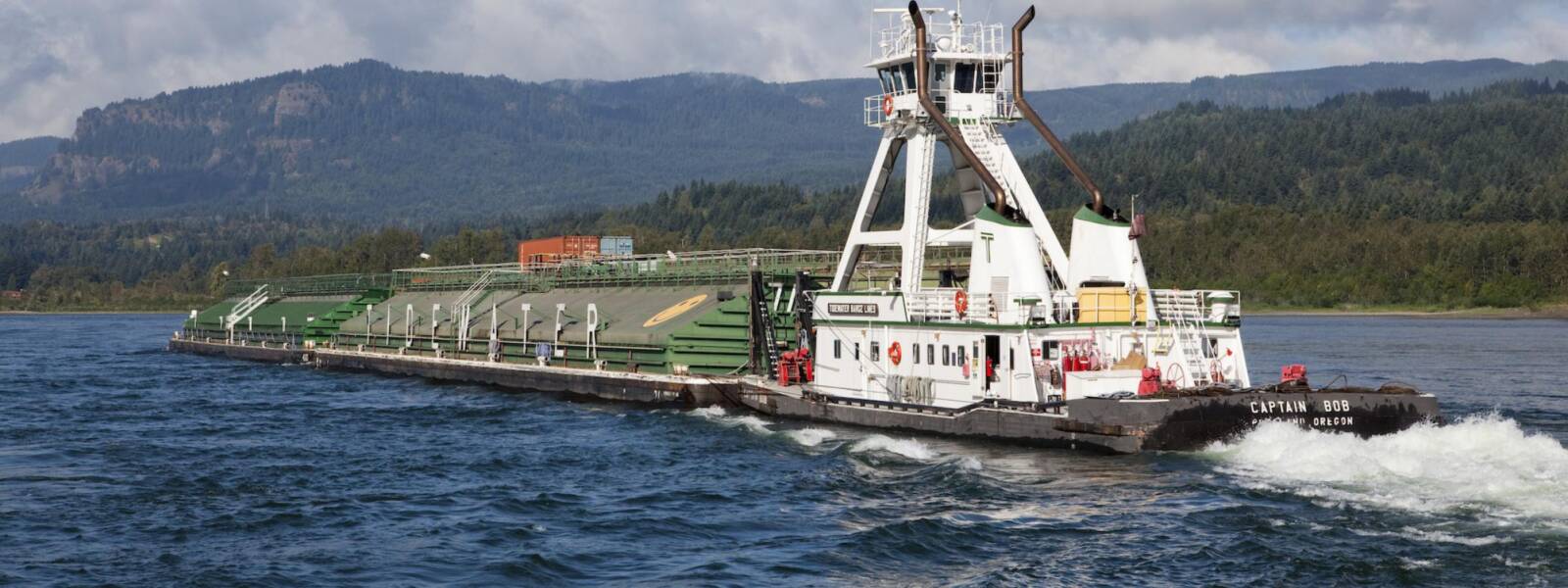
PHOTO: AWO
BY STAS MARGARONIS
IN THIS REPORT:
- AWO’S CARPENTER URGES TRUMP NOT TO EXTEND JONES ACT WAIVER
- AWO LAUNCHES “INTENSE ADVOCACY”
- REPORT DISPUTES TRUMP WAIVER BENEFIT
- CATO REPORT SAYS WAIVER IS A BENEFIT
- OSG’S NORTON: U.S. OIL REFINERS & DISTRIBUTORS BENEFIT FROM WAIVER
- SEAFARERS’S HEINDEL SAYS WAIVER IS “A HOAX”
- JONES ACT SUPPORTERS SAYS THEY WILL BE HEARD IN NOVEMBER
- THE JONES ACT WORKFORCE
- FOOTNOTES
Despite strong opposition from the U.S. maritime industry, the Trump administration is considering further extending the Jones Act waiver allowing foreign flag ships to continue to carry cargoes between U.S. ports.
Jennifer Carpenter, President and CEO American Waterways Operators (AWO) issued the following statement in response to an inquiry from this reporter: “AWO continues to work alongside Congress on both sides of the aisle, including Republican leadership, in strongly urging President Trump not to extend this Jones Act waiver. The waiver is harming American maritime jobs, eroding investment in U.S. maritime, and needlessly allowing Chinese and other foreign operators to move cargo on our domestic waterways at the expense of safety, supply chain integrity, and national security – all while having no impact on the price of gasoline. President Trump needs to trust his instincts and truly put Americans first by ending the waiver.”
AWO LAUNCHES “INTENSE ADVOCACY”
On July 16th AWO issued a statement to its members and allies stating: “Over the past 72 hours, AWO and the American Maritime Partnership have been engaged in intense behind-the-scenes advocacy as the White House approaches a decision point on a potential extension of the Jones Act waiver. We need your help now to turn up the volume and enhance those efforts. As reported by multiple media outlets, high-level Administration officials met this week to consider an extension of the waiver and a White House announcement could be made at any time.”[1]
The U.S. Department of Homeland Security (DHS) approved a 90-day extension of the waiver, commencing May 18, 2026 that extends to August 16, 2026 unless it is extended.[2]
The Trump administration rationale for the waiver was that it would lower gasoline prices that had spiked as a result of the Iran War and the shutting off of Middle East oil supplies when the Strait of Hormuz was shut.
REPORT DISPUTES TRUMP WAIVER BENEFIT
The American Maritime Partnership commissioned Navigistics Consulting Releases ‘Jones Act 2026 Waiver After Action Report’ to examine the effects of the Jones Act waiver on the U.S. economy. Key findings of the report released on June 30th, 2026 were:
- No Military Necessity – Of the 78 waiver voyages documented in the U.S. Maritime Administration’s (MARAD) June 1 report, not one met the only legal standard required to justify a Jones Act waiver. Every movement involved commercial-grade materials incompatible with DoD fuel requirements.
- U.S. Ships Were Available and Ready – American vessels were available for 86.5% of qualifying voyages. The waiver wasn’t a necessity, it was a choice that bypassed a ready and willing U.S. fleet.
- The Waiver Is Handing Cargo to China – Foreign-flag vessels built in China (23.1%) and under Chinese control (18.5%) are now moving American domestic cargo that U.S. ships were available to carry – opening domestic shipping lanes to foreign competitors at a moment of heightened national security concern.
- Gas Prices Haven’t Moved – An 11-week analysis found no credible evidence of price relief at the pump. In several routes, Jones Act vessels were actually cheaper than their foreign-flag counterparts. Meanwhile, only ~6.5% … of U.S. gasoline is transported on vessels. American consumers are paying the price for a policy that isn’t delivering what was promised.
- America Was Exporting Fuel During the Alleged Shortage – While the waiver was justified as a response to domestic supply strain, the U.S. exported approximately 731 million barrels of petroleum – with crude, diesel, and jet fuel all up from prior years. Refiners were making commercial choices, not responding to a crisis.[3]
CATO REPORT SAYS WAIVER IS A BENEFIT
On July 13th, the Washington-based Cato Institute, a conservative think tank and longtime opponent of the Jones Act, published an analysis “Introducing the Jones Act Waiver Tracker” written by Cato analyst Colin Grabow. The analysis says the Jones Act waiver has added foreign vessel capacity to the delivery of energy products in the United States but does not say that it reduced gasoline prices:
“The Waiver Is Adding Capacity, Not Displacing It: A common objection to the waiver is that foreign-flagged vessels are simply taking business away from Jones Act-compliant ships. The available evidence suggests otherwise. A separate tracker monitoring all 56 Jones Act-compliant tankers has shown that every one of them has been fully employed since it was set up in late May. That matters for interpreting the waiver’s numbers.”
The analysis focuses on key sectors that have benefited from the waiver: “The case is even stronger for certain cargoes because the necessary self-propelled, oceangoing ship types used in their transportation simply do not exist in the Jones Act fleet. All three propane voyages were carried aboard LPG tankers, a vessel type entirely absent from the fleet. All three asphalt/bitumen voyages used asphalt carriers, another vessel type absent from the fleet. Three additional voyages transporting petroleum coke or fertilizer used dry bulk carriers, equally absent from the fleet, while another fertilizer shipment required a tanker of a size not represented in the Jones Act fleet.”
In other words, “the waiver appears to expand domestic maritime transportation in two distinct ways. First, it supplements a Jones Act tanker fleet that is already fully employed. Second, it enables movements requiring specialized, oceangoing vessel types that are absent from the Jones Act fleet altogether. In neither case is there evidence that foreign-flagged vessels are displacing idle US-flag ships.”[4]
OSG’S NORTON: U.S. OIL REFINERS & DISTRIBUTORS BENEFIT FROM WAIVER
Last week, Sam Norton, CEO, Overseas Shipholding Group (OSG), a Jones Act Ocean carrier, charged in a LinkedIn post that the Trump administration’s rationale for the Jones Act waiver has not resulted in lower gasoline prices.
Norton also disputes the Cato Institute assertion that no U.S. vessels have been adversely impacted: “U.S.-flagged vessels have sat idle while lower-cost foreign-flag vessels perform domestic voyages under a continuing Jones Act waiver.”
Norton asserts that U.S. oil refiners and distributors have benefitted from the waiver: “It is hard to dispute who has benefited most from the ongoing conflict with Iran: the refiners and distributors that produce and move fossil fuels across the United States. In recent days, crack spreads have reached 70% to 75% of the value of a barrel of crude. At the start of June, they were about 45%. At the beginning of 2026, they were about 27%. By many estimates, ExxonMobil and Chevron’s earnings are expected to have tripled in the April-to-June quarter compared with the first quarter. Meanwhile, U.S.-flagged vessels have sat idle while lower-cost foreign-flag vessels perform domestic voyages under a continuing Jones Act waiver — bypassing the law that requires cargo moving between U.S. ports to travel on U.S.-built, U.S.-crewed, and U.S.-operated vessels. U.S. maritime jobs have suffered, and the long-term health of the broader U.S. maritime industry has been weakened on multiple fronts.”[5]
OSG describes itself as ”a leading provider of energy transportation services delivering crude oil and petroleum products throughout the United States and the world.”[6]
SEAFARERS’S HEINDEL SAYS WAIVER IS “A HOAX”
David Heindel, President, Seafarers International Union of North America added his voice in opposition to the waiver arguing in a LinkedIn post that: “The Jones Act waiver does not guarantee that American oil stays in America. It does not ensure California receives more Alaska crude. And it has not delivered meaningful savings to American consumers at the pump. The waiver created more flexibility for global oil trading. It did not prioritize America’s energy security or American consumers. When the economics favor Asia, that’s where the crude goes. The waiver is a hoax. End the Waiver put Americans back to work.”
JONES ACT SUPPORTERS SAYS THEY WILL BE HEARD IN NOVEMBER
Carpenter told AJOT that the Trump administration’s decision to extend the Jones Act waiver is not only galvanizing maritime labor, shipbuilders, tug and barge operators to build a broader U.S. maritime coalition, but the threat to jobs has also motivated the Jones Act workers and employers to make sure that they are heard by House and Senate candidates running for office in the mid-term elections this November.
Carpenter says the Trump administration is hearing from AWO’s members who come from “America’s tugboat, towboat and barge industry … Folks who own and operate towing vessels and barges throughout our inlet river system on all three coasts, on the Great Lakes, provide essential ship docking and other harbor services in ports and harbors around the country.” Carpenter is also President and CEO of the American Maritime Partnership (AMP). She says the American Maritime Partnership “is a coalition that really brings together all of the entities throughout the US domestic maritime industry in support of one goal and that is the Jones Act … vessel owners, maritime labor, shipyards, pro defense organizations … AWO has a handful of priorities. The Jones Act is at the top of the list. AMP is where we focus solely on the Jones Act.”
THE JONES ACT WORKFORCE
The Jones Act, the Merchant Marine Act of 1920, requires that cargoes transported between U.S. ports must be transported on vessels built in the United States, crewed by U.S. mariners and owned by U.S. citizens.
In 2019, PricewaterhouseCoopers produced an analysis: “Contribution of the Jones Act Shipping Industry to the US Economy” which concluded that: “In addition to the 95,470 direct jobs in the industry, the Jones Act shipping industry supported another 552,750 indirect and induced jobs in other sectors of the economy.”
FOOTNOTES
[1] https://www.americanwaterways.com/media/newsletters/act-now-prevent-jones-act-waiver-extension
[2] https://www.hklaw.com/en/insights/publications/2026/04/cbp-extends-jones-act-waiver-period-adds-new-documentation-item
[3] https://www.americanmaritimepartnership.com/press-releases/navigistics-consulting-releases-jones-act-2026-waiver-after-action-report/
[4] https://www.cato.org/blog/introducing-jones-act-waiver-tracker
[5]https://www.linkedin.com/feed/update/urn:li:activity:7481371516140617728/?origin=NETWORK_CONVERSATIONS
[6] https://www.osg.com/